28++ How to pipe water out of a spring naturally information
Home » Wallpapers » 28++ How to pipe water out of a spring naturally informationYour How to pipe water out of a spring naturally images are ready in this website. How to pipe water out of a spring naturally are a topic that is being searched for and liked by netizens now. You can Get the How to pipe water out of a spring naturally files here. Get all free photos and vectors.
If you’re looking for how to pipe water out of a spring naturally pictures information linked to the how to pipe water out of a spring naturally topic, you have come to the right site. Our website always gives you hints for downloading the maximum quality video and image content, please kindly hunt and locate more enlightening video content and images that match your interests.
How To Pipe Water Out Of A Spring Naturally. This situation requires the pump to be manually primed again before water can flow. As you trench between the spring and a support post at the trough leave a small amount of earth unexcavated to hold the water in the spring. 2 GPM Dole valve on the pump small pressure tank and pressure switch at the pump. 18 per foot drop is sufficient however I increased that to 14 per foot as I figured that would get me somewhere between an 18 a 14 per foot.
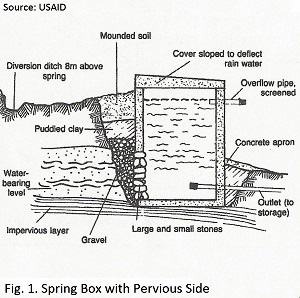 Spring Development And Seep Development From clean-water-for-laymen.com
As you trench between the spring and a support post at the trough leave a small amount of earth unexcavated to hold the water in the spring. Generally trying to stop a natural spring is a lost cause on a residential scale - controlling the water and getting it into a form you can handle is almost always the cheapest solution - normally by either diverting the flow as it exits the ground or sometimes by putting in a bordered pond at the exit point then controlling the water as it exits the pond. Cover The spring with dry dirt. Place the spring box in a recessed area in the ground below the elevation of the collection system. For spring flows that cover a wide area. Water will flow downhill but also sink into the soil.
Remove the standing water with a shovel and dig a few inches into the ground.
For spring flows that cover a wide area. A minimum depth of 2 feet will help prevent future damage from cattle and wildlife traffic. How do spring water supply systems typically work to deliver water to a building. In summer I hook a garden hose to the bottom a d fill the pipe with water. Where solid or clay layers block the underground flow of water it. We then took three PCV water pipe about 1 12 inch diameter and drilled several holes into each pipe and connected them into a larger pipe which collected the water from all three.
 Source: pinterest.com
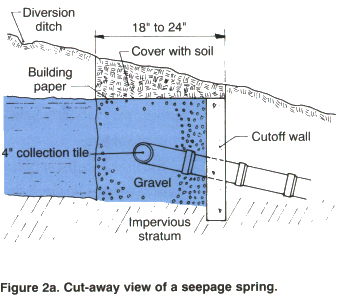
This situation requires the pump to be manually primed again before water can flow. Spring water is usually fed from a sand or gravel water-bearing soil formation called an aquifer or a water flow through fissured rock. A spring may be defined as a place where a na-tural outflow of groundwater occurs. Collection tile should be connected to 4-inch pipe that leads to the spring box. Places where the water leaves the soil and gets to the surface to run off will help.
Source: clean-water-for-laymen.com
Place one end of a channeling source such as a plastic pipe as deep into the water source as possible. Use the float switch to simply open or close a sprinkler type solenoid valve at the contact tank. Continue to cover the pipes with dirt. A working foot valve keeps the supply line from the Spring constantly full of water ie not allowing it to drain back down the pipe. The ditch can be lined with stones to stabilize it.
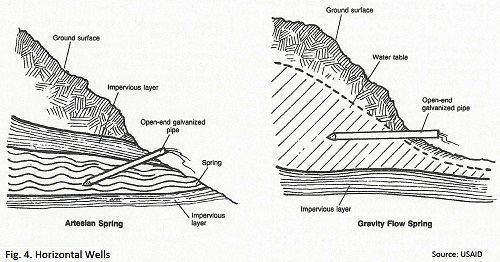 Source: clean-water-for-laymen.com
Do this in winter. Locate and examine underground water pipes wells and holding tanks. A minimum depth of 2 feet will help prevent future damage from cattle and wildlife traffic. Water must be able to flow freely without pressure towards the spring box so it does not backup behind the spring headwall. Cover The spring with dry dirt.
 Source: id.pinterest.com
As you trench between the spring and a support post at the trough leave a small amount of earth unexcavated to hold the water in the spring. Attach the backwash pipe overflow pipe and outlet pipe to outside of cutoff wall. You want to eliminate depressions and add drainage. Places where the water leaves the soil and gets to the surface to run off will help. How do spring water supply systems typically work to deliver water to a building.
 Source: pinterest.com
Without it the supply line would empty to some degree and when the pump turns on it will be pumping air instead of water. Water getting into the soil causes springs. As long as its not your driveway or sidewalk. The bottom of the trench should be set to the depth you plan to take the water out of the spring. Solution for me is to blow air into the pipe form the bottom so as to fill the pipe then the water coming down will take the air out of the totally empty pipe.
 Source: en.hesperian.org
Use the float switch to simply open or close a sprinkler type solenoid valve at the contact tank. Carefully dig into the hillside until you reach a steady flow of water. Water must be able to flow freely without pressure towards the spring box so it does not backup behind the spring headwall. Water getting into the soil causes springs. For spring flows that cover a wide area.
 Source: h2osolutions.com
Cover The spring with dry dirt. Step 3 Find the spot where water congregates frequently and dig a pit for the water. Generally trying to stop a natural spring is a lost cause on a residential scale - controlling the water and getting it into a form you can handle is almost always the cheapest solution - normally by either diverting the flow as it exits the ground or sometimes by putting in a bordered pond at the exit point then controlling the water as it exits the pond. Box inlet must be be-low the elevation of the collector tile. Carefully dig into the hillside until you reach a steady flow of water.
 Source: pinterest.com
Collection tile should be connected to 4-inch pipe that leads to the spring box. A spring may be defined as a place where a na-tural outflow of groundwater occurs. Without it the supply line would empty to some degree and when the pump turns on it will be pumping air instead of water. For spring flows that cover a wide area. Do this in winter.
 Source: oneacrevintagehome.com
Watch for water seeping back into the area if this happens then there is an abundance of water in the area. Remove the standing water with a shovel and dig a few inches into the ground. Water must be able to flow freely without pressure towards the spring box so it does not backup behind the spring headwall. We then took three PCV water pipe about 1 12 inch diameter and drilled several holes into each pipe and connected them into a larger pipe which collected the water from all three. Water from the spring may simply be hand-dipped out or water may be piped to a holding tank or directly to a building.
 Source: pinterest.com
Locate and examine underground water pipes wells and holding tanks. The ditch can be lined with stones to stabilize it. How do spring water supply systems typically work to deliver water to a building. Remove potential sources of contamination and divert surface water away from spring box or collec-tion area. Do this in winter.
 Source: pinterest.com
As you bury your pipe remember to slope it downhill so water will run away from the spring. Watch for water seeping back into the area if this happens then there is an abundance of water in the area. Do this in winter. A spring box or spring house is constructed around the spring to try to keep out leaves debris and animals or other surface contaminants. See Figure 3 for an example of a spring box with collection pipes.
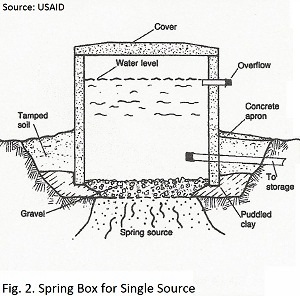 Source: clean-water-for-laymen.com
Step 3 Find the spot where water congregates frequently and dig a pit for the water. A spring may be defined as a place where a na-tural outflow of groundwater occurs. Cover The spring with dry dirt. Water must be able to flow freely without pressure towards the spring box so it does not backup behind the spring headwall. There is less fuss and monkeying around with this but no fun in a Minnesota winter.
 Source: youtube.com
Water will flow downhill but also sink into the soil. A spring may be defined as a place where a na-tural outflow of groundwater occurs. Without it the supply line would empty to some degree and when the pump turns on it will be pumping air instead of water. This situation requires the pump to be manually primed again before water can flow. Generally the trenches should be 1 meter below the water level.
 Source: pinterest.com
If the spring is in the side of a hill dig into the hill aways and you may find a bolder vein to use. Pumping from the spring we can do this with out telemetry. Without it the supply line would empty to some degree and when the pump turns on it will be pumping air instead of water. For spring flows that cover a wide area. This situation requires the pump to be manually primed again before water can flow.
 Source: pinterest.com
You want to eliminate depressions and add drainage. Pumping from the spring we can do this with out telemetry. A minimum depth of 2 feet will help prevent future damage from cattle and wildlife traffic. Box inlet must be be-low the elevation of the collector tile. This situation requires the pump to be manually primed again before water can flow.
 Source: findaspring.com
For spring flows that cover a wide area. Cover the spring with black plastic to make sure the surface water doesnt flow into the spring. Remove the standing water with a shovel and dig a few inches into the ground. 18 per foot drop is sufficient however I increased that to 14 per foot as I figured that would get me somewhere between an 18 a 14 per foot. Install a pipe low in the collecting wall to direct the water from the interception reservoir to a concrete or plastic spring box.
 Source: pinterest.com
Dig a diversion ditch about a yard above the eye of the spring that slopes away on either side to carry away excess rainwater that may pollute the spring with run off mud and plant matter. Remove potential sources of contamination and divert surface water away from spring box or collec-tion area. Be sure to dig deeply enough to get a clean avenue to place a channeling source. Remove the standing water with a shovel and dig a few inches into the ground. Clean clear water flows from the collection pipes to the storage or collection box.
 Source: p2infohouse.org
Where solid or clay layers block the underground flow of water it. Water from the spring may simply be hand-dipped out or water may be piped to a holding tank or directly to a building. A minimum depth of 2 feet will help prevent future damage from cattle and wildlife traffic. A working foot valve keeps the supply line from the Spring constantly full of water ie not allowing it to drain back down the pipe. 2 GPM Dole valve on the pump small pressure tank and pressure switch at the pump.
This site is an open community for users to do sharing their favorite wallpapers on the internet, all images or pictures in this website are for personal wallpaper use only, it is stricly prohibited to use this wallpaper for commercial purposes, if you are the author and find this image is shared without your permission, please kindly raise a DMCA report to Us.
If you find this site serviceableness, please support us by sharing this posts to your favorite social media accounts like Facebook, Instagram and so on or you can also save this blog page with the title how to pipe water out of a spring naturally by using Ctrl + D for devices a laptop with a Windows operating system or Command + D for laptops with an Apple operating system. If you use a smartphone, you can also use the drawer menu of the browser you are using. Whether it’s a Windows, Mac, iOS or Android operating system, you will still be able to bookmark this website.
