31++ Developing a spring for household water ideas
Home » Background » 31++ Developing a spring for household water ideasYour Developing a spring for household water images are available. Developing a spring for household water are a topic that is being searched for and liked by netizens now. You can Find and Download the Developing a spring for household water files here. Download all royalty-free photos.
If you’re searching for developing a spring for household water images information connected with to the developing a spring for household water interest, you have pay a visit to the ideal site. Our site frequently provides you with suggestions for downloading the maximum quality video and picture content, please kindly surf and locate more enlightening video articles and graphics that match your interests.
Developing A Spring For Household Water. The windmill pumps water from the well through a pipe to a tank that is above the level of the house. How do spring water supply systems typically work to deliver water to a building. Water from the spring may simply be hand-dipped out or water may be piped to a holding tank or directly to a building. Protecting the spring from surface contamination is essential during all phases of spring development.
 Spring Development And Seep Development From clean-water-for-laymen.com
Cover the transport with rock and soil to hold it in place being sure to leave a good portion sticking out of the ground for easy access. A spring is a water resource formed when the side of a hill a valley bottom or other excavation intersects a flowing body of groundwater at or below the local water table below which the subsurface material is saturated with water. 34 January 2010 Tables Table 321 Water well constructions methods 322 Table 322 Capacity of cylinders 324 Table 323 AWWA casing thickness 3213 Table 324 Relation of changing diameter to yield of wells 3214 Table 325 Differential head limitations for. Collections of natural spring water in your yard can give the family dog a place to cool off on a hot day but groundwater traveling from the spring could also be a problem for your home. Cover the spring with black plastic to make sure the surface water doesnt flow into the spring. The rule of thumb is that it should hold at least a half days supply of water.
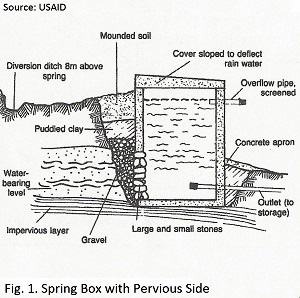
A spring can be developed into a drinking water supply by collecting the discharged water using tile or pipe and running the water into some type of sanitary storage tank.
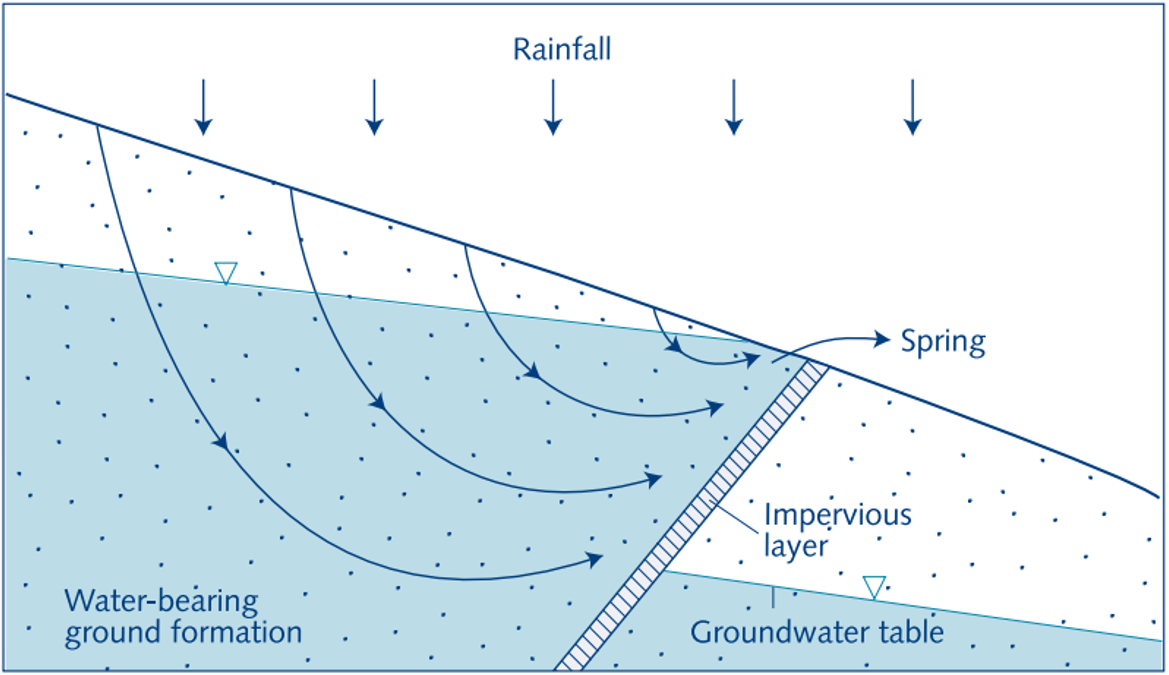
A spring is the result of an aquifer being filled to the point that the water overflows onto the land surface. Protecting the spring from surface contamination is essential during all phases of spring development. Springs or wells and the development and mainte-nance of groundwater recovery systems are described. Water must be able to flow freely without pressure towards the spring box so it does not backup behind the spring headwall. In addition to providing drinking wa - ter for livestock a developed spring as an alternative water source has several other benefits. It can remove excess water from a saturated area in the pasture allowing the pasture to be safely grazed.
 Source: open.edu
18 per foot drop is sufficient however I increased that to 14 per foot as I figured that would get me somewhere between an 18 a 14 per foot. The term groundwater is a simplistic term that encompasses water in the saturated zone beneath the. How do spring water supply systems typically work to deliver water to a building. Part 631 National Engineering Handbook Chapter 32 Well Design and Spring Development 32iv 210VINEH Amend. Develop a Concentrated Spring Dig out the area around the spring.
 Source: sswm.info
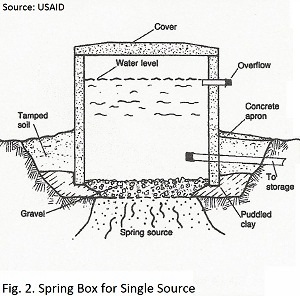
18 per foot drop is sufficient however I increased that to 14 per foot as I figured that would get me somewhere between an 18 a 14 per foot. A spring box or spring house is constructed around the spring to try to keep out leaves debris and animals or other surface contaminants. The term groundwater is a simplistic term that encompasses water in the saturated zone beneath the. You can develop a spring in several different ways. Spring Development A spring can be developed into a drinking water supply by collecting the discharged water using tile or pipe and running the water into some type of sanitary storage tank.
 Source: clean-water-for-laymen.com
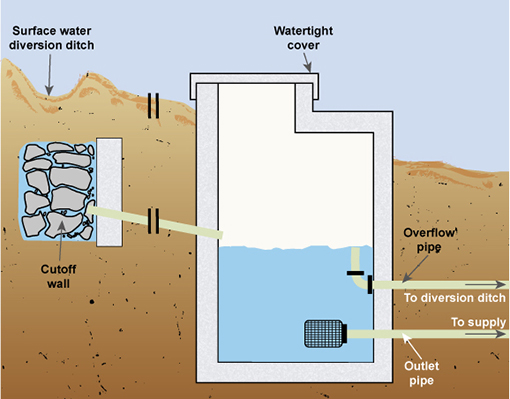
How do spring water supply systems typically work to deliver water to a building. The disruption of the natural flow and excavation will result in muddycloudy water for a while but a true natural spring will clear up quickly once everything begins to. A spring can be developed into a drinking water supply by collecting the discharged water using tile or pipe and running the water into some type of sanitary storage tank. Attach the backwash pipe overflow pipe and outlet pipe to outside of cutoff wall. Springs can be developed in two.
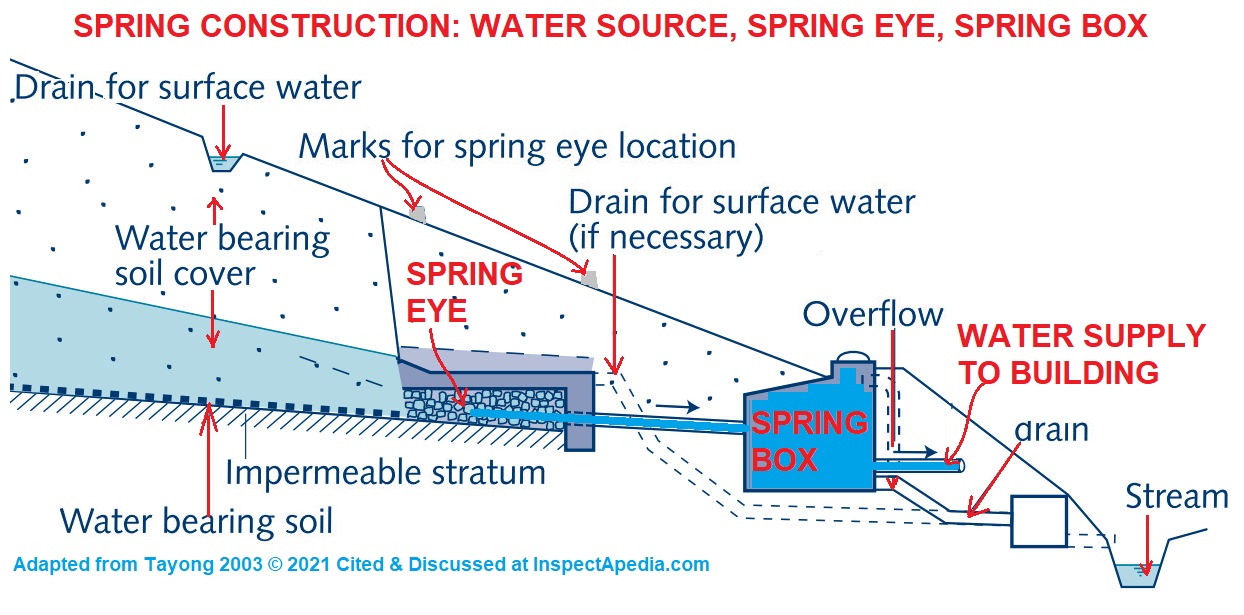 Source: inspectapedia.com
A spring can be developed into a drinking water supply by collecting the discharged water using tile or pipe and running the water into some type of sanitary storage tank. In addition to providing drinking wa - ter for livestock a developed spring as an alternative water source has several other benefits. There are three methods of spring development for use as drinking water sources. Collections of natural spring water in your yard can give the family dog a place to cool off on a hot day but groundwater traveling from the spring could also be a problem for your home. The disruption of the natural flow and excavation will result in muddycloudy water for a while but a true natural spring will clear up quickly once everything begins to.
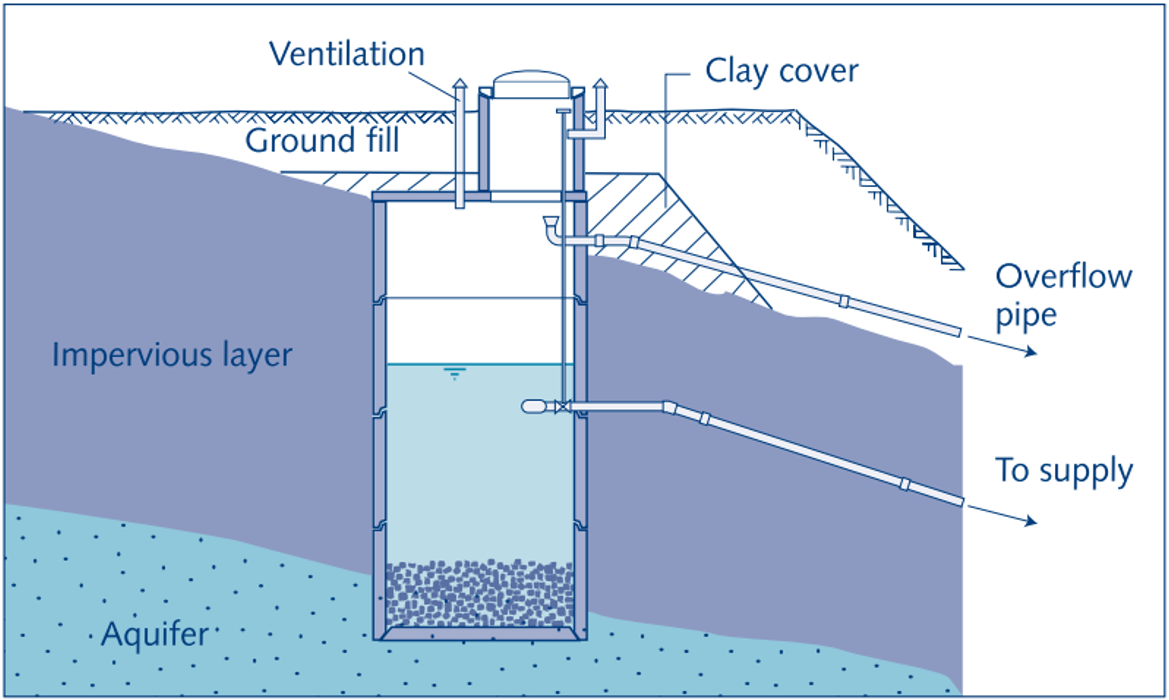 Source: sswm.info
The rule of thumb is that it should hold at least a half days supply of water. Water must be able to flow freely without pressure towards the spring box so it does not backup behind the spring headwall. Protecting the spring from surface contamination is essential during all phases of spring development. The term groundwater is a simplistic term that encompasses water in the saturated zone beneath the. Prime candidates for development as a livestock water source.
 Source: youtube.com
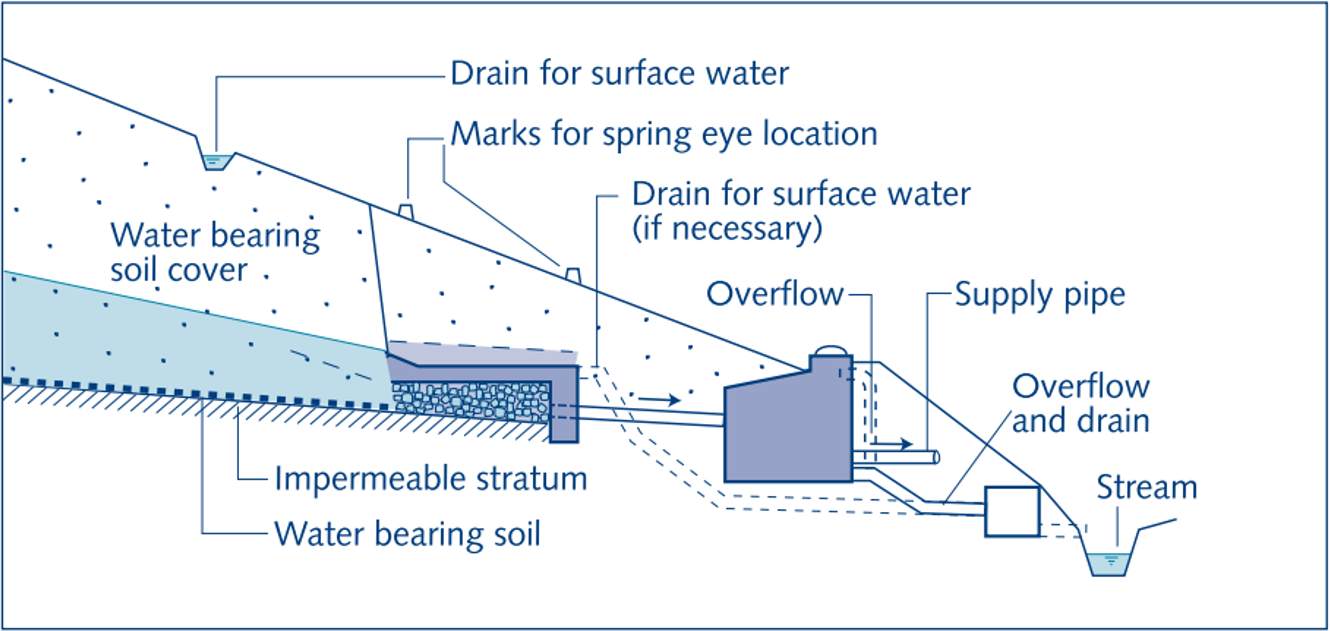
Spring water comes from aquifers groundwater in layers of limestone and sandshell similar to a sponge. Spring Development A spring can be developed into a drinking water supply by collecting the discharged water using tile or pipe and running the water into some type of sanitary storage tank. There are two basic types of intakes for spring development and collecting water from springs and seeps. The most appropriate option for a community depends on existing water and sanitation conditions water quality cultural acceptability implementation feasibility availability of technology and other local conditions. Develop a Concentrated Spring Dig out the area around the spring.
 Source: pinterest.com
Develop a Concentrated Spring Dig out the area around the spring. Collections of natural spring water in your yard can give the family dog a place to cool off on a hot day but groundwater traveling from the spring could also be a problem for your home. The disruption of the natural flow and excavation will result in muddycloudy water for a while but a true natural spring will clear up quickly once everything begins to. Develop a Concentrated Spring Dig out the area around the spring. Here is the first step in installing a spring water catchment About Press Copyright Contact us Creators Advertise Developers Terms Privacy Policy Safety How YouTube works Test new.
 Source: inspectapedia.com
Place the spring box in a recessed area in the ground below the elevation of the collection system. It can remove excess water from a saturated area in the pasture allowing the pasture to be safely grazed. Protecting the spring from surface contamination is essential during all phases of spring development. Here is the first step in installing a spring water catchment About Press Copyright Contact us Creators Advertise Developers Terms Privacy Policy Safety How YouTube works Test new. As you bury your pipe remember to slope it downhill so water will run away from the spring.
 Source: encrypted-tbn0.gstatic.com
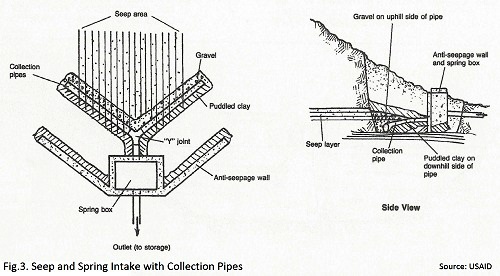
Here is the first step in installing a spring water catchment About Press Copyright Contact us Creators Advertise Developers Terms Privacy Policy Safety How YouTube works Test new. Place the spring box in a recessed area in the ground below the elevation of the collection system. A spring can be developed into a drinking water supply by collecting the discharged water using tile or pipe and running the water into some type of sanitary storage tank. One cubic foot of water equals about 75 gallons You can build your own cache out of filled concrete block. There are two basic types of intakes for spring development and collecting water from springs and seeps.
 Source: motherearthnews.com
Cover the spring with black plastic to make sure the surface water doesnt flow into the spring. Cover the transport with rock and soil to hold it in place being sure to leave a good portion sticking out of the ground for easy access. Springs or wells and the development and mainte-nance of groundwater recovery systems are described. Develop your spring for use as a water source by controlling its flow. The windmill pumps water from the well through a pipe to a tank that is above the level of the house.
 Source: sswm.info
There are two basic types of intakes for spring development and collecting water from springs and seeps. Place the spring box in a recessed area in the ground below the elevation of the collection system. Part 631 National Engineering Handbook Chapter 32 Well Design and Spring Development 32iv 210VINEH Amend. Water must be able to flow freely without pressure towards the spring box so it does not backup behind the spring headwall. Develop your spring for use as a water source by controlling its flow.
 Source: clean-water-for-laymen.com
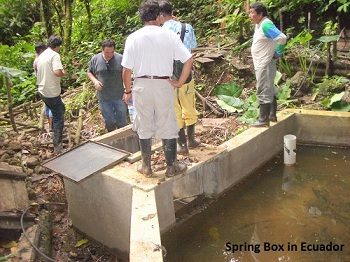
A spring box or spring house is constructed around the spring to try to keep out leaves debris and animals or other surface contaminants. The most appropriate option for a community depends on existing water and sanitation conditions water quality cultural acceptability implementation feasibility availability of technology and other local conditions. 18 per foot drop is sufficient however I increased that to 14 per foot as I figured that would get me somewhere between an 18 a 14 per foot. The windmill pumps water from the well through a pipe to a tank that is above the level of the house. The disruption of the natural flow and excavation will result in muddycloudy water for a while but a true natural spring will clear up quickly once everything begins to.
 Source: wildthingsoffgridsolar.com
A spring can be developed into a drinking water supply by collecting the discharged water using tile or pipe and running the water into some type of sanitary storage tank. Cover the transport with rock and soil to hold it in place being sure to leave a good portion sticking out of the ground for easy access. The windmill pumps water from the well through a pipe to a tank that is above the level of the house. 18 per foot drop is sufficient however I increased that to 14 per foot as I figured that would get me somewhere between an 18 a 14 per foot. Develop a Concentrated Spring Dig out the area around the spring.
 Source: clean-water-for-laymen.com
The disruption of the natural flow and excavation will result in muddycloudy water for a while but a true natural spring will clear up quickly once everything begins to. The term groundwater is a simplistic term that encompasses water in the saturated zone beneath the. Water will then flow by gravity through a regular pipe system to the house and to livestock water troughs. A spring is a water resource formed when the side of a hill a valley bottom or other excavation intersects a flowing body of groundwater at or below the local water table below which the subsurface material is saturated with water. A spring box or spring house is constructed around the spring to try to keep out leaves debris and animals or other surface contaminants.
 Source: motherearthnews.com
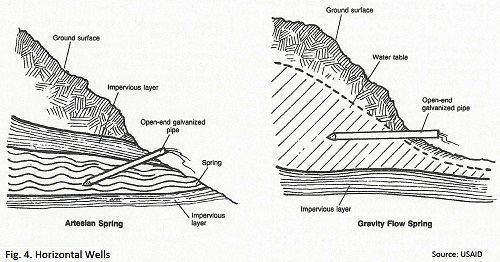
There are three methods of spring development for use as drinking water sources. The most appropriate option for a community depends on existing water and sanitation conditions water quality cultural acceptability implementation feasibility availability of technology and other local conditions. Cover the transport with rock and soil to hold it in place being sure to leave a good portion sticking out of the ground for easy access. Cover the spring with black plastic to make sure the surface water doesnt flow into the spring. Attach the backwash pipe overflow pipe and outlet pipe to outside of cutoff wall.
 Source: wildthingsoffgridsolar.com
Attach the backwash pipe overflow pipe and outlet pipe to outside of cutoff wall. Here is the first step in installing a spring water catchment About Press Copyright Contact us Creators Advertise Developers Terms Privacy Policy Safety How YouTube works Test new. Collections of natural spring water in your yard can give the family dog a place to cool off on a hot day but groundwater traveling from the spring could also be a problem for your home. The first and easiest to install is the spring. Cover the transport with rock and soil to hold it in place being sure to leave a good portion sticking out of the ground for easy access.
 Source: clean-water-for-laymen.com
Springs or wells and the development and mainte-nance of groundwater recovery systems are described. There are three methods of spring development for use as drinking water sources. How do spring water supply systems typically work to deliver water to a building. You can develop a spring in several different ways. There are two basic types of intakes for spring development and collecting water from springs and seeps.
 Source: wildthingsoffgridsolar.com
The rule of thumb is that it should hold at least a half days supply of water. A spring is the result of an aquifer being filled to the point that the water overflows onto the land surface. Spring water comes from aquifers groundwater in layers of limestone and sandshell similar to a sponge. Springs or wells and the development and mainte-nance of groundwater recovery systems are described. 34 January 2010 Tables Table 321 Water well constructions methods 322 Table 322 Capacity of cylinders 324 Table 323 AWWA casing thickness 3213 Table 324 Relation of changing diameter to yield of wells 3214 Table 325 Differential head limitations for.
This site is an open community for users to share their favorite wallpapers on the internet, all images or pictures in this website are for personal wallpaper use only, it is stricly prohibited to use this wallpaper for commercial purposes, if you are the author and find this image is shared without your permission, please kindly raise a DMCA report to Us.
If you find this site helpful, please support us by sharing this posts to your preference social media accounts like Facebook, Instagram and so on or you can also save this blog page with the title developing a spring for household water by using Ctrl + D for devices a laptop with a Windows operating system or Command + D for laptops with an Apple operating system. If you use a smartphone, you can also use the drawer menu of the browser you are using. Whether it’s a Windows, Mac, iOS or Android operating system, you will still be able to bookmark this website.
